ASC General Society Awards
2026 HERBERT BLOCH AWARD
The Herbert Bloch Award (established in 1961) is given to recognize outstanding service contributions to the American Society of Criminology and to the professional interests of criminology. Nominators should send a letter evaluating the nominee’s contributions relevant to this award, and the nominee’s curriculum vitae to the Bloch Award Committee Chair in electronic format.
Members of the ASC Board may not receive this award during their term in office. The Executive Board may decide not to give the award in any given year. Award decisions will be based on the strength of the nominees’ qualifications and not on the number of nomination endorsements received for any particular candidate. All nomination materials should be submitted to the Committee Chair in electronic format. The deadline for nominations is March 1.
Committee Chair: Elsa Chen, Santa Clara University
2026 GENE CARTE STUDENT PAPER COMPETITION
The Gene Carte Student Paper Award (established in 1971) (Sponsored by Wiley Publishing Co.) is given to recognize outstanding scholarly work of students. Any student currently enrolled on a full-time basis in an academic program at either the undergraduate or graduate level is invited to participate in the Carte Student Paper competition. Those enrolled in Post-Doc programs are ineligible.
Prior Carte Award first place winners are ineligible for any future Carte student paper competitions. Previous prize-winning papers (any prize from any organization and or institution) are ineligible. Dual submissions of the same paper for the Carte Award and any other ASC award in the same year (including division awards) are disallowed. Papers can be submitted to only one ASC student competition in the same year. Students may submit only one paper a year for consideration. This includes co-authored works. Multiple authored papers are admissible for Carte Award consideration, as long as all authors are students in good standing at the time of the submission. Papers that have been accepted for publication at the time of submission for the Carte Award are ineligible.
Papers may be conceptual and/or empirical but must be directly related to criminology. Papers may be no longer than 8,000 words (excluding tables and references). The Criminology format for the organization of text, citations and references should be used. Authors’ names and departments should appear only on the title page. The next page of the manuscript should include the title and a 100-word abstract. The authors also need to submit a copy of the manuscript, as well as a letter verifying their enrollment status as full-time students, co-signed by the dean, department chair or program director, all in electronic format.
Those who submit papers for the Carte award must sign a statement that verifies that they are the authors of the said piece (ie., the piece is not plagiarized). The students’ academic advisor will also submit a signed statement that to the best of their knowledge, the paper has been authored by the said student and is not plagiarized. If the Carte Committee feels the paper was plagiarized, the Committee Chair may contact the said student’s advisor(s) and indicate that the Carte Committee feels that the paper may have been plagiarized.
The Carte Award Committee will rate entries according to criteria such as the quality of the conceptualization, significance of the topic, clarity and aptness of methods, quality of the writing, command of relevant work in the field, and contribution to criminology. The 1st, 2nd, and 3rd place papers will be awarded prizes of $1000, $600, and $400, respectively and will be eligible for presentation at the upcoming Annual Meeting. The 1st prize winner will also receive a travel award of up to $1000 to help defray costs for attending the Annual Meeting. The Executive Board may decide not to give the awards, or to give fewer than three awards, in any given year. Award decisions will be based on the quality of the manuscripts and not on the number of nomination endorsements received for any particular manuscript. All nomination materials should be submitted to the Committee Chair in electronic format. The deadline for submission is April 15.
Committee Chair: Daniel Martinez, The University of Arizona
2026 RUTH SHONLE CAVAN YOUNG SCHOLAR AWARD
The Ruth Shonle Cavan Young Scholar Award (established in 1997) is given to recognize outstanding scholarly contributions to the discipline of criminology by someone who has received a Ph.D., MD, LL.D. or a similar graduate degree no more than five (5) years before the selection for the award (for this year the degree must have been award no earlier than May 2021), unless exceptional circumstances necessitated a hiatus in their scholarly activities. Eligibility extensions for major career interruptions include but are not limited to giving birth (one year per child, up to two years total), adoption, illness as well as having care responsibilities, which cause a hiatus or significant impediment to scholarly activities. Nomination letters should concisely explain the circumstances justifying the extensions. If the candidate has multiple graduate degrees, the last five-year period is from the date when the last degree was received. The award may be for a single work or a series of contributions, and may include co-authored works. Those interested in being considered or in nominating someone for the Cavan Award should send: (a) a letter evaluating a nominee’s contributions to the discipline of criminology; (b) when relevant, include an explanation/justification for “major career interruptions;” (c) applicant’s/nominee’s curriculum vitae; and (d) no more than 3 published works, which may include a combination of articles and one book. Members of the ASC Board may not receive this award during their term in office. The Executive Board may decide not to give the award in any given year. Award decisions will be based on the strength of the nominees’ qualifications and not on the number of nomination endorsements received for any particular candidate. All nomination materials should be submitted to the Committee Chair in electronic format, except for book submissions. A hard copy of any book submission should be mailed to the Committee Chair. The deadline for nominations is March 1.
Committee Chair: Lyndsay Boggess, University of South Florida
2026 W.E.B. DU BOIS RESEARCH AWARD
The W.E.B. Du Bois Research Award (established in 2023) is given to recognize transformative scholarship that engages criminology, criminal justice and race/ethnicity. The scholarship may be based on research that investigates in the intellectual tradition of Du Bois, such as an examination of race/ethnicity-related issues through methodology, theory development/critique, historical analysis, and/or ethnographic scholarship. The award, which may be given to an individual or collaborators, may be based on a single book, a single article, a thread of related research, or the body of work of a senior scholar.
Members of the ASC Board may not receive this award during their term in office. The Executive Board may decide not to give the award in any given year. Award decisions will be based on the strength of the nominees’ qualifications and not on the number of nomination endorsements received for any particular candidate. Nominators should send a letter evaluating the nominee’s contributions relevant to this award, and the nominee’s curriculum vitae to the Committee Chair in electronic format. The deadline for nominations is March 1.
Committee Chair: Victor Rios, University of California, Santa Barbara
2026 ASC FELLOWS
The ASC Fellows Committee invites nominations for Fellows in the Society. This designation is given to recognize scholarly contributions to criminology and distinction in the discipline. Longevity alone is not sufficient. Examples of contributions may include innovations in public policy as well as enhancing diversity, equity and inclusion within the Society and the field of criminology. In addition, a Fellow must have made a significant contribution to the field through the career development of other criminologists and/or through organizational activities within the American Society of Criminology. Nominees must be members in good standing of the Society. The Board may designate up to five (5) persons as Fellows annually.
Nominators should send a letter evaluating the nominee’s contributions relevant to this award, and a copy of the nominee’s curriculum vitae to the Fellows Committee Chair in electronic format. Please limit nominations to a single cover letter and the nominee’s curriculum vitae.
Members of the ASC Board may not be designated as Fellows during their term in office. The Executive Board may decide not to designate any Fellows, or to designate fewer than five (5) Fellows, in any given year. Fellow designation is based on the strength of the nominees’ qualifications and not on the number of nomination endorsements received for any particular candidate.
All nomination materials should be submitted to the Committee Chair in electronic format. The deadline for nominations is March 1.
Committee Chair: Nancy Rodriguez, The University of Texas at Austin
2026 GRADUATE STUDENT POSTER AWARD
The Graduate Student Poster Award is given to recognize outstanding scholarly work of students. Any student currently enrolled on a full-time basis in an academic program at the graduate level is invited to participate in the Graduate Student Poster competition. Those enrolled in Post-Doc programs are ineligible. Multiple authored posters are admissible for consideration, as long as all authors are full-time graduate students.
The Graduate Student Poster Award Committee will judge submissions primarily on scientific merit and secondarily on visual appeal. Submissions should be as complete as possible, with a question, method, data, and (preliminary) results and implications. Awards for 1st, 2nd and 3rd place will be given. The first prize winner shall receive an award of $1000. The second prize winner shall receive an award of $600. The third prize winner shall receive an award of $400. The award recipients may request an Annual Meeting fee waiver from the Society President.
The Executive Board may decide not to give the awards, or to give fewer than three awards, in any given year. Award decisions will be based on the quality of the posters and not on the number of endorsements received for any particular poster.
Graduate students who wish to enter this competition should adhere to the directions and deadline for presenting a poster at the Annual Meeting. In addition, such participants must self-declare their request for award consideration at the time of submission by marking the appropriate box on this poster submission form. Participants must also send a brief (2-3 minute) YouTube video presentation of their poster to the Graduate Student Poster Award Committee Chair by June 24, 2026.
Committee Chair: Heath Grant, John Jay College of Criminal Justice, CUNY
2026 MICHAEL J. HINDELANG OUTSTANDING BOOK AWARD
The Michael J. Hindelang Outstanding Book Award (established in 1992) is given for a book, originally published within three (3) calendar years preceding the year in which the award is made, that makes the most outstanding contribution to research in the field of criminology. For this year, the book must have been published in 2023, 2024, or 2025. To be considered, books must be nominated by individuals who are members of the American Society of Criminology. The Committee will not consider anthologies and/or edited volumes. To nominate a book, please submit the title of the book, its authors, the publisher, the year of the publication, and a brief discussion of your reasons for the recommendation to the Hindelang Award Committee Chair in electronic format.
Current members of the Executive Board shall be ineligible to receive any awards of the Society, including selection as a Fellow, during their term in office. However, if a current Board member is nominated for either the Michael J. Hindelang Outstanding Book Award or Joan Petersilia Outstanding Article Award, their nomination shall be considered during the first year following their service on the Board. The Executive Board may decide not to give the award in any given year. Award decisions will be based on the quality of the books and not on the number of nomination endorsements received for any particular book.
All nomination materials should be submitted to the Committee Chair in electronic format. The deadline for nominations is February 15.
Committee Chair: Karen Parker, University of Delaware
2026 MENTOR AWARD
The Mentor Award (established in 2014) is given to recognize excellence in mentorship in the discipline of criminology. Nominations of individuals at all stages of their academic careers are encouraged.
Any nonstudent member of the ASC is an eligible candidate for the ASC Mentor Award, including persons who hold a full or part time position in criminology, practitioners and researchers in nonacademic settings. The award is not limited to those who participate in the ASC mentoring program.
Nonstudent members may be nominated by colleagues, peers, or students but self-nominations are not allowed. A detailed letter of nomination should contain concrete examples and evidence of how the nominee has sustained a record of enriching the professional lives of others, and be submitted to the Mentor Award Committee Chair in electronic format.
The mentorship portfolio should include:
The letter should specify the ways the nominee has gone beyond their role as a professor, researcher or collaborator to ensure successful enculturation into the discipline of criminology, providing intellectual professional development outside of the classroom, and otherwise exemplary support for criminology/criminal justice undergraduates, graduates and post-graduates.
Letters of nomination (including statements in support of the nomination), the nominee’s portfolio, and all other supporting materials should be submitted to the Mentor Award Committee Chair in electronic format.
Members of the ASC Board may not receive this award during their term in office. The Executive Board may decide not to give the award in any given year. Award decisions will be based on the strength of the nominees’ qualifications and not on the number of nomination endorsements received for any particular candidate.
All nomination materials should be submitted to the Committee Chair in electronic format. Deadline for submission is June 1.
Committee Chair: Bianca Bersani, University of Maryland
2026 JOAN PETERSILIA OUTSTANDING ARTICLE AWARD
The Joan Petersilia Outstanding Article Award (established in 2006) is given for the peer-reviewed article published in the previous calendar year that makes the most outstanding contribution to research in the field of criminology. The current Committee will consider articles published during the 2024 calendar year. The Committee automatically considers all articles published in Criminology and in Criminology & Public Policy, and will consider articles of interest published in other journals. We are also soliciting nominations for this award. To nominate articles, please send full citation information for the article and a brief discussion of your reasons for the recommendation to the Petersilia Award Committee Chair in electronic format.
Current members of the Executive Board shall be ineligible to receive any awards of the Society, including selection as a Fellow, during their term in office. However, if a current Board member is nominated for either the Michael J. Hindelang Outstanding Book Award or Joan Petersilia Outstanding Article Award, their nomination shall be considered during the first year following their service on the Board. The Executive Board may decide not to give the award in any given year. Award decisions will be based on the quality of the manuscripts and not on the number of endorsements received for any particular manuscript.
All nomination materials should be submitted to the Committee Chair in electronic format. The deadline for nominations is February 15.
Committee Chair: Jodi Lane, University of Florida
2026 RUTH D. PETERSON FELLOWSHIPS FOR RACIAL AND ETHNIC DIVERSITY
The Ruth D. Peterson Fellowship for Racial and Ethnic Diversity fellowships are given to encourage students of color, especially those from racial and ethnic groups underrepresented in the field, to enter the field of criminology/criminal justice, and to facilitate the completion of their degrees.
Applicants are to be from racial and ethnic groups underrepresented in the field, including but not limited to, Asians, Blacks, Indigenous peoples, and Latinas/os. Applicants need not be members of the American Society of Criminology. Individuals studying criminology or criminal justice issues are encouraged to apply. The recipients of the fellowships must be accepted into a program of doctoral studies in the general area of criminology or criminal justice. Individuals may reapply for the award if they have not received it previously.
A complete application must contain (1) proof of admission to a criminal justice, criminology, or related program of doctoral studies; (2) up-to-date curriculum vita; (3) personal statement describing the applicant’s race/ethnicity and its importance in the applicant’s scholarship and/or career plans; (4) copies of undergraduate and graduate transcripts; (5) statement of need and prospects for financial assistance for graduate study; (6) a letter clearly articulating career plans, salient experiences, and motivations within criminology and criminal justice that fit in line with the Fellowship’s purpose; and (7) three letters of reference. All application materials should be submitted to the Peterson Fellowship Committee Chair in electronic format as a single pdf attachment.
Up to five (5), $8,000 fellowships can be awarded annually. The Executive Board may decide not to award the fellowships, or to give fewer than five (5) fellowships, in any given year. Award decisions will be based on the strength of the nominees’ qualifications and not on the number of nomination endorsements received for any particular candidate.
All nomination materials should be submitted to the Committee Chair in electronic format. The deadline for nominations is February 1.
Committee Chair: Deena Isom, University of South Carolina
2026 THORSTEN SELLIN & SHELDON AND ELEANOR GLUECK AWARD
The Thorsten Sellin & Sheldon and Eleanor Glueck Award (established in 1974) is given to recognize criminological scholarship that considers problems of crime and justice as they are manifested outside the United States, internationally or comparatively. Preference is given to scholarship that analyzes non-U.S. data, is predominantly outside of U.S. criminological journals, and, in receiving the award, brings new perspectives or approaches to the attention of the members of the Society. The recipient need not speak English. However, their work must be available in part, at least, in the English language (either by original publication or through translation).
Nominators should send a letter evaluating the nominee’s contributions relevant to this award, and a copy of the nominee’s curriculum vitae to the Sellin-Glueck Committee Chair in electronic format. Please limit nominations to a single cover letter and the nominee’s curriculum vitae.
Members of the ASC Board may not receive this award during their term in office. The Executive Board may decide not to give the award in any given year. Award decisions will be based on the strength of the nominees’ qualifications and not on the number of nomination endorsements received for any particular candidate.
All nomination materials should be submitted to the Committee Chair in electronic format. The deadline for nominations is March 1.
Committee Chair: Bitna Kim, Sam Houston State University
2026 EDWIN H. SUTHERLAND AWARD
The Edwin H. Sutherland Award (established in 1960) is given to recognize outstanding scholarly contributions to theory or research in criminology on the etiology of criminal and deviant behavior, the criminal justice system, corrections, law or justice. The distinguished contribution may be based on a single outstanding book or work, on a series of theoretical or research contributions, or on the accumulated contributions by a senior scholar.
Nominators should send a letter evaluating the nominee’s contributions relevant to this award, and a copy of the nominee’s curriculum vitae to the Sutherland Award Committee Chair in electronic format. Please limit nominations to a single cover letter and the nominee’s curriculum vitae.
Members of the ASC Board may not receive this award during their term in office. The Executive Board may decide not to give the award in any given year. Award decisions will be based on the strength of the nominees’ qualifications and not on the number of nomination endorsements received for any particular candidate.
All nomination materials should be submitted to the Committee Chair in electronic format. The deadline for nominations is March 1.
Committee Chair: Karen Heimer, University of Iowa
2026 TEACHING AWARD
The Teaching Award (established in 2008) is given to recognize excellence in undergraduate and/or graduate teaching over the span of an academic career. This award identifies and rewards teaching excellence that has been demonstrated by individuals either (a) at one educational institution where the nominee is recognized and celebrated as a master teacher of criminology/criminal justice; or, (b) at a regional or national level as a result of that individual’s sustained efforts to advance criminological/criminal justice education.
Any faculty member who holds a full-or part-time position teaching criminology or criminal justice is eligible for the award, inclusive of graduate and undergraduate universities as well as two- and four-year colleges. In addition, faculty members who have retired are eligible within the first two years of retirement.
Faculty may be nominated by colleagues, peers, or students; or they may self-nominate, by writing a letter of nomination to the Teaching Award Committee Chair in electronic format. Letters of nomination should include a statement in support of the nomination of not more than three pages. The nominee and/or the nominator may write the statement.
Nominees will be contacted by the Chair of the Teaching Award Committee and asked to submit a teaching portfolio of supporting materials.
The teaching portfolios should include:
The materials in the portfolio should include brief, descriptive narratives designed to provide the Teaching Award Committee with the proper context to evaluate the materials. Student evaluations, for example, should be introduced by a very brief description of the methods used to collect the evaluation data and, if appropriate, the scales used and available norms to assist with interpretation. Other materials in the portfolio should include similar brief descriptions to assist the Committee with evaluating the significance of the materials.
Members of the ASC Board may not receive this award during their term in office. The Executive Board may decide not to give the award in any given year. Award decisions will be based on the strength of the nominees’ qualifications and not on the number of nomination endorsements received for any particular candidate.
Letters of nomination should be submitted to the Teaching Award Committee Chair in electronic format and must be received by April 1. The nominee’s portfolio and all other supporting materials should also be submitted to the Teaching Award Committee Chair in electronic format and must be received by June 1.
Committee Chair: Xavier Guadalupe-Diaz, Framingham State University
2026 AUGUST VOLLMER AWARD
The August Vollmer Award (established in 1959) is given to recognize an individual whose scholarship and professional activities have made outstanding contributions to justice and/or to the treatment or prevention of criminal or delinquent behavior.
Nominators should send a letter evaluating the nominee’s contributions relevant to this award, and a copy of the nominee’s curriculum vitae to the Vollmer Award Committee Chair in electronic format. Please limit nominations to a single cover letter and the nominee’s curriculum vitae.
Members of the ASC Board may not receive this award during their term in office. The Executive Board may decide not to give the award in any given year. Award decisions will be based on the strength of the nominees’ qualifications and not on the number of nomination endorsements received for any particular candidate.
All materials should be submitted to the Committee Chair in electronic format. The deadline for nominations is March 1.
Committee Chair: Andrea Leverentz, NC State University
HERBERT BLOCH AWARD RECIPIENTS
The Herbert Bloch Award recognizes outstanding service contributions to the American Society of Criminology and to the professional interests of criminology.
1961: no award given
1962: Andrew Marinak
1963: no award given
1964: no award given
1965: no award given
1966: Charles Newman
1967: Donal E. J. MacNamara
1968: no award given
1969: no award given
1970: no award given
1971: no award given
1972: Freda Adler
1973: C. Ray Jeffery
1974: no award given
1975: Albert Morris
1976: no award given
1977: Harry E. Allen
1978: Barbara R. Price
1979: William E. Amos & Edward Sagarin
1980: Alvin W. Cohn
1981: no award given
1982: James Inciardi
1983: Joseph E. Scott
1984: no award given
1985: Marc Riedel
1986: J. Robert Lilly
1987: Chris W. Eskridge
1988: Sarah Hall
1989: Phyllis Jo Baunach
1990: Charles F. Wellford
1991: Joan McCord
1992: Julius Debro
1993: Hugh D. Barlow
1994: C. Ronald Huff
1995: Ruth D. Peterson
1996: Meda Chesney-Lind
1997: Marjorie Zatz
1998: James Hackler
1999: Sally Simpson
2000: Kenneth Adams
2001: Lynne Goodstein
2002: Candace S. McCoy
2003: no award given
2004: Doris MacKenzie
2005: Bob Bursik
2006: Rosemary Barberet
2007: Todd Clear
2008: Bonnie Berry
2009: Alfred Blumstein
2010: James F. Short, Jr.
2011: Henry Pontell
2012: Julie Horney
2013: Margaret Zahn
2014: Becky Block
2015: John H. Laub & James Lynch
2016: Francis T. Cullen
2017: Robert Crutchfield & Nancy LaVigne
2018: David P. Farrington
2019: Amanda Burgess-Proctor
2020: Natasha Frost
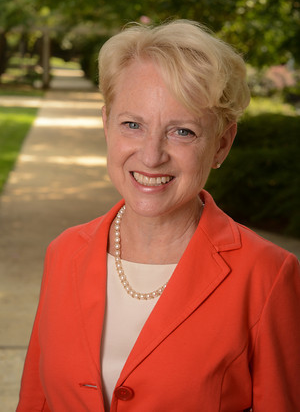
Laurie Robinson is George Mason University’s Clarence J. Robinson Professor Emerita of Criminology, Law and Society. She joined GMU in 2012 after more than three decades working on national criminal justice policy. In 2014, in the aftermath of Ferguson, President Obama named her to co-chair the White House Task Force on 21st Century Policing, charged with developing recommendations on building trust between law enforcement and communities. In 2014-16, she served on the Congressionally created Colson Task Force on federal prison crowding. She currently sits on the NYC Commission on closing Rikers Island, and chairs the Board of the Council on Criminal Justice, a national think tank advancing data-driven criminal justice policy choices.
Robinson twice served as a Senate-confirmed Assistant Attorney General heading the U.S. Department of Justice Office of Justice Programs, DOJ’s research, statistics and criminal justice assistance agency. Her three years of service in the Obama Administration, coupled with seven years under President Clinton, make her the longest serving head of that agency in its 50 years.
Between her stints in government, Robinson was the founding director of the University of Pennsylvania’s Criminology MS Program. During her first DOJ tenure in the ‘90s, she oversaw a $4 billion dollar budget and the largest increase in federal spending on crime-related research in the nation’s history, as well as spearheading major federal initiatives on violence against women and drug treatment courts. She has served on numerous national boards including the National Academies of Science Committee on Law and Justice.
 Jody Miller (she, her, hers) is a Distinguished Professor in the School of Criminal Justice at Rutgers University. Her research utilizes qualitative methods to investigate how inequalities of gender, race, sexuality and place shape participation in crime and risks for victimization, with concentrations in the United States and South Asia. Miller is Co-Director of the National Science Foundation-sponsored Racial Democracy, Crime and Justice Network (RDCJN) and Co-Editor of Criminology. She is a Fellow of the ASC, has served as ASC Vice President, and has won numerous awards for her work, including the 2015 ASC Mentor Award.
 Dr. Cynthia Lum is University Professor of Criminology, Law and Society at George Mason University and Director of GMU’s Center for Evidence-Based Crime Policy. She was named a Fellow of the American Society of Criminology in 2021. She is a leading authority on evidence-based policing, an approach that advocates that research, evaluation, and scientific processes should have “a seat at the table” in law enforcement policymaking and practice. She has studied and written extensively about patrol operations and police crime prevention activities, police technology, investigations and detective work, and evidence-based crime policy. Additionally, she has developed numerous tools and strategies to translate and institutionalize research into everyday law enforcement operations. For her efforts, she received the Virginia State Council for Higher Education Outstanding Faculty Award, the commonwealth’s highest faculty honor and was the inaugural recipient of GMU’s Presidential Medal for Social Impact. Dr. Lum is an appointed member of the National Academies of Sciences Committee on Law and Justice, an appointed trustee to the Council on Criminal Justice, and a board director for the National Policing Institute. Dr. Lum has served numerous elected and appointed positions within the American Society of Criminology and is Co-Editor in Chief of Criminology & Public Policy, the society’s flagship policy journal. She is the founding editor of Translational Criminology Magazine. Professor Lum is a former police officer and detective.
 Charis E. Kubrin is Professor of Criminology, Law & Society and (by courtesy) Sociology at the University of California, Irvine. She is a member of the Council on Criminal Justice, the Racial Democracy, Crime and Justice- Network, the Diversity Scholars Network, and the Scholars Strategy Network. She is an expert for the Crime and Justice Research Alliance. Dr. Kubrin’s policy-relevant research examines the immigration-crime nexus and considers the impact of immigration-related policy on immigrants, immigrant families and immigrant communities as well as assesses the impact of criminal justice reform on crime rates. Another line of research examines the use of rap lyrics as evidence in criminal trials against young men of color. Dr. Kubrin has received several national awards including the Ruth Shonle Cavan Young Scholar Award from the American Society of Criminology (for outstanding scholarly contributions to the discipline of criminology); the Coramae Richey Mann Award from the Division on People of Color and Crime, the American Society of Criminology (for outstanding contributions of scholarship on race/ethnicity, crime and justice); the W.E.B. DuBois Award from the Western Society of Criminology (for significant contributions to racial and ethnic issues in the field of criminology); and, the Paul Tappan Award from the Western Society of Criminology (for outstanding contributions to the field of criminology). In 2019, she was named a Fellow of the American Society of Criminology. Dr. Kubrin has served numerous elected and appointed positions within the American Society of Criminology, including as former Co-Editor of Criminology, as member of the Executive Board, and as Program Co-Chair for the 2024 annual meeting.
2025: No award given
2026: William Alex Pridemore, University of Georgia
 William Pridemore is Marienthal Professor in the Department of Sociology at University of Georgia. He is a Fellow of the American Society of Criminology and of the American Association for the Advancement of Science.
Dr. Pridemore played a central role in the creation and was a founding Editorial Board member of Annual Review of Criminology. For 16 years he was ASC’s liaison to the American Association for the Advancement of Science, and he is currently Secretary of AAAS’s Section for Social, Economic, and Political Sciences. With Dr. Karen Parker he revived US News & World Report’s ranking of Criminology PhD programs. He created and was the Founding Director of Indiana University’s Workshop in Methods. Dr. Pridemore served as Dean of the UAlbany School of Criminal Justice School (2015-2020) and as Department Head of the UGA Department of Sociology (2023-2026).
Dr. Pridemore’s main research interests include the impact of social structure and culture on homicide and suicide rates, the role of alcohol in violence and mortality rates, and the influence of long-term societal development on the evolution of violence morphology. Other research interests include measurement and method, population health, policy effects on population-level violence and health, and rural criminology and sociology. His award-winning interdisciplinary research has been published in leading journals in criminology, sociology, substance use, and public health and epidemiology. He has a forthcoming book, The Criminologic Transition Model: On the Evolution of the Nature of Crime and Violence, with Cambridge University Press.
GENE CARTE STUDENT PAPER AWARD RECIPIENTS
The Gene Carte Student Paper Award is given to recognize outstanding scholarly work of students.
The Gene Carte Student Paper Award was formally created in 1981, but student paper awards were given on a sporadic basis prior to that time. This list has been compiled using documents in the ASC archive. Unfortunately our archives are not complete and consequently this list cannot be considered definitive. Please report any errors or omissions to the ASC offices (kvance@asc41.org).
1972: Lawrence Rawlings, Self Control and Interpersonal Violence: A Study of Scottish Adolescent Male Severe Offenders
1973: C Ronald Huff, Unionization behind the Walls
1976: Gary S. Green, Measuring the Incapacitative Effectiveness of Fixed Punishment
1980: Thomas Gabor
1981: award not given
1982:
1983:
1984:
1985:
1986:
1987: First Place – Tamasak Witayapanyanon
1988: First Place – Paul Knepper
1989:
1990:
1991:
1992:
1993:
1994:
1995:
1996:
1997:
1998:
1999:
2000:
2001:
2002:
2003:
2004:
2005:
2006:
2007:
2008:
2009:
2010:
2011:
2012:
2013:
2014:
2015:
2016:
2017:
2018:
2019:
2020:
2021:
2022:
2023:
2024:
2025:

Sino Esthappan earned his PhD from the Department of Sociology at Northwestern University and is an Assistant Professor of Sociology and Criminology at Hofstra University. His mixed-methods research uses a range of empirical cases, including criminal court risk assessment tools and college campus sexual violence policies, to examine how organizational reforms aimed at reducing unequal punishment outcomes can instead reproduce and entrench them. His scholarship is funded by the American Bar Foundation and National Science Foundation and published in sociology and criminology journals such as Social Problems, Qualitative Sociology, and Criminal Justice Policy Review.
_____________________ *** _____________________
 Maya Moritz is a doctoral candidate in the University of Pennsylvania Department of Criminology. Her work focuses on place-based interventions including street lighting and murals. By utilizing novel data sources and technologies, she is exploring opportunities for mechanism testing to better understand and implement these environmental changes. She also leads grant- and award-funded projects to implement and evaluate a court-mandated community service marketplace and to experimentally assess juror and expert perceptions of forensic evidence. Her work has been published in Criminology and Public Policy, Justice Quarterly, and Cities. She is a DAAD-funded Visiting Scholar at the Max Planck Institute, an embedded researcher at the Philadelphia District Attorney’s Office, a Junior Fellow of the Institute for Humane Studies, a Doctoral Fellow of the Academy of Criminal Justice Sciences, a recipient of the Kimchi Graduate Travel Award, and has won the Penn Grad Talks competition in the Social Sciences category. She completed her B.Sc. in Economics at the University of St. Andrews, where she wrote her thesis on the German dual vocational training system and studied abroad at the University of Toronto. For her M.Sc. in Economics at Universität Mannheim, she contributed to projects related to the impact of family size on educational attainment and the legacy of legal reform in Prussia. She has also served in research assistance and science communications roles at the Heidelberg Institute for Geoinformation Technology, the GESIS-Leibniz Institute for the Social Sciences, the St. Andrews School of Economics, and the Rotman School of Management.
_____________________ *** _____________________
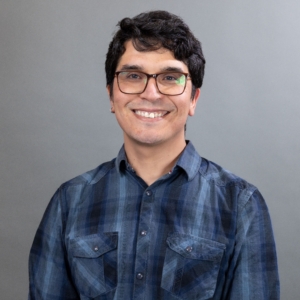 Daniel Fredes García is a Ph.D. candidate in the Department of Criminology and Criminal Justice at the University of Maryland, where he earned his M.A. He completed his B.A. in Sociology at the Universidad de Chile and later earned an M.A. in Social Survey Design and Analysis from the Pontificia Universidad Católica de Chile. His research interests include the causes and consequences of state violence, as well as crime, justice, and safety in the Global South. His doctoral research examines the Venezuelan diaspora across South America, focusing on state responses to this unprecedented immigration shock, public reactions to the diaspora, and whether and how it has shaped crime and safety.
RUTH SHONLE CAVAN YOUNG SCHOLAR AWARD RECIPIENTS
The Ruth Shonle Cavan Young Scholar Award is given to recognize outstanding scholarly contributions to the discipline of criminology by someone who has received the Ph.D., MD, LL.D. or a similar graduate degree no more than five years before the year of the award.
1997: David A. Klinger
1998: Lisa A. Maher
1999: Richard A. Leo
2000: Christopher Uggen
2001: Jody Miller
2002: Alex R. Piquero & Eric Silver
2003: Eric Baumer
2004: Jeffrey D. Morenoff
2005: Charis Kubrin
2006: Travis Pratt
2007: Aaron Kupchik
2008: Brian D. Johnson
2009: Kevin Beaver
2010: John Hipp
2011: Derek Kreager
2012: Andrew Papachristos & Min Xie
2013: Christopher Wildeman
2014: Callie Burt
2015: Justin Pickett
2016: David C. Pyrooz
2017: Keramet Reiter
2018: Hollie Nyseth Brehm
2019: Jillian Turanovic
2020: Holly Nguyen
2021: Megan Denver, Northeastern University
2022: Matthew Clair, Stanford University
2023: Scott Duxbury, University of North Carolina at Chapel Hill
2024: Emma E. Fridel, Florida State University
2025: Kwan-Lamar Blount-Hill, Arizona State University
 Tony Cheng is an Assistant Professor of Sociology at Duke University. His research examines how the legitimation of state power shapes inequality within communities. His work combines ethnographic, historical, experimental, and administrative data to connect the organizational logic of the state with the grounded experiences of community members to illuminate how state power, institutional trust, and social inequality intersect in practice. His book, The Policing Machine: Enforcement, Endorsements, & the Illusion of Public Input (University of Chicago Press, 2024), analyzes how America’s largest police department, the NYPD, resists institutional reforms by cultivating political capital through the community constituencies they empower.
His work has been published in leading journals including the American Journal of Sociology, Criminology, Science Advances, Sociological Science, Social Problems, and Law & Society Review, and has been supported by the Russell Sage Foundation, Arnold Ventures, and the National Science Foundation (CAREER Award). He is a member of the Racial Democracy, Crime and Justice Network and has received the American Society of Criminology’s Joan Petersilia Outstanding Article Award (2022) and the ASC Division of Communities & Place Bursik Junior Scholar Award (2023). He received his PhD in Sociology from Yale University in 2021 and his JD from New York University in 2018. He will be a visiting scholar at the Russell Sage Foundation in 2026-2027.
DU BOIS AWARD
The W.E.B. Du Bois Research Award (established in 2023) is given to recognize transformative scholarship that engages criminology, criminal justice and race/ethnicity.
2025: Ruth D. Peterson, Ohio State University
 Robert D. Crutchfield is Professor Emeritus in the Department of Sociology at the University of Washington. He’s studied inequality and crime and racial inequality in criminal justice. His research on inequality and crime, pulled together in Get A Job: Labor Markets, Economic Opportunity and Crime, describes the relationship between the stratification of labor and individual crime and delinquency, and variations in urban crime rates. His criminal justice research addresses racial disparities in police contacts and disparities in criminal processing and incarceration. Before graduate school Bob was a juvenile probation officer, and an adult parole agent in Pennsylvania. These experiences motivated his study of the consequences of inequality and influenced both his research and teaching.
Bob was Vice President of the ASC, elected to the council of the American Sociological Association (ASA) and chair of the ASA Section on Crime, Law, and Deviance. He is a Fellow of the ASC, recipient of the Herbert Bloch Award, The ASC’s Division on People of Color and Crime’s Coramae Richey Mann and Lifetime Achievement Awards. He received the W.E.B. Du Bois and Fellows Awards from the Western Society of Criminology. Bob is a founding member of the Racial Democracy, Crime and Justice Network. He chaired the Committee on Law and Justice of the National Academy of Sciences.
Bob chaired his department and received the University’s Distinguished Teaching Award. He served on the Washington Council on Crime and Delinquency Board, The Washington State Juvenile Sentencing Commission, and the Board of the Sentencing Project.
LIST OF ASC FELLOWS
Those designated as Fellows are recognized for their scholarly contributions to criminology and distinction in the discipline.
The year these individuals were designated as Fellows is noted. Unfortunately, our historical records are not complete. Some of the years noted are a “best guess,” based on available archived documents. If you have more accurate information, please contact the ASC Office.
GRADUATE STUDENT POSTER COMPETITION AWARD RECIPIENTS
The Graduate Student Poster Competition (established 2020) is given to recognize outstanding scientific merit and visual appeal of work by students.
2021:
First Place – Vitor Goncalves, Pre-trial detention as a source of cumulative racial disadvantage in a Brazilian city
Second Place – Qian He, The Geography of Crime and Neighborhood Characteristics: Roles of Built Environment and Social Disadvantage
Third Place – Jennifer Smith, The Impact of Monetary Penalties on Recidivism in PA Juvenile Courts
2022:
First Place – Byunggu Kang, Cohort Effects on Homicide in Korea
Second Place – Dosun Kim, The Effect of Police Legitimacy on Personal Information Disclosure Willingness
Second Place – Veyli Ortiz Solis, Hostile Encounters
Third Place – Alvi Ali, Educator Sexual Misconduct: An Examination of Sanction Disparities Among Texas Female and Male Educators
2023:
First Place – Nicholas Goldrosen, Misconduct Clusters Amongst Correctional Officers
Second Place – Julio Montanez, County Intimate Partner Polyvictimization: Using Biodiversity Measures to Analyze Non-Fatal Victimization in Florida
Third Place – Jessica Raskauskas, Criminalizing Queerness
2024:
First Place – Shujing Shi, Mapping the Structure and Dynamics of Organized Drug Trafficking Routes in China
Second Place – Carisma Jano & Jeffrey Peterson, The “Kia Boys” Trend and Auto Theft: An Empirical Study
Third Place – Dylan O’Donoghue, Precarity by Design: A Study of Tech Sector Lobbying on Issues Related to Migrant Labor
2025:
First Place – Oghenerhuru Daniel & Jill Reeves, Endangered Democracy: A Multi-Level Multinational Analysis of Institutional and Societal Trust on Political Participation
Second Place – Rachel Wallace, Reparations for Eugenics: Sterilization in California’s Jails and Prisons
Third Place – Noy Assaraf, Beyond Gender Lines: The Impact of Pre-Incarceration Parent-Child Attachment on the Delinquency of Prisoners’ Children
 Haneen J. Alani is a doctoral candidate in Criminal Justice at the University of New Haven whose interdisciplinary background spans criminology, psychological counseling, clinical practice, and health sciences research. She has extensive experience coordinating multi-site research and evaluating programs and interventions within medical, behavioral health, and federal healthcare settings. Her work involves interdisciplinary collaboration across agencies and stakeholders to inform clinical practice, service delivery, and policy. Her research examines the intersection of environmental criminology, social control, homelessness, and the regulation of public space. Her dissertation investigates hostile seating in Manhattan using a mixed-methods design integrating longitudinal quasi-experimental, spatial, and public discourse analyses. The study evaluates whether design-based interventions intended to promote safety and order correspond with changes in public reporting and low-level enforcement. It also examines how these interventions are framed within broader debates about homelessness, disorder, and exclusion. Her dissertation research received first-place recognition at the University of New Haven Graduate Student Showcase. Alani also teaches criminal justice, criminology, and quantitative methods. Her pedagogical approach combines evidence-based instruction with case-based analysis and applied data exercises. For example, students examine contemporary criminal justice problems through real-world scenarios, interpret empirical findings, and evaluate their implications for policy and practice. She emphasizes methodological literacy and the application of criminological theory to contemporary issues. She was recently recognized with the Phenomenal Women Award through faculty and student nominations.
_____________________ *** _____________________
 Paisley Smith is a graduate student in the Department of Sociology at Washington State University with a focus on social stratification, critical criminology, and spatial context. Paisley holds an M.S. in Criminal Justice from the University of North Texas where she published research on the association between substance use, stable housing, and mental health on outcomes in a specialty prostitution court in a large, urban Texas county. Continuing this research through her dissertation, Paisley utilizes a mixed-methods approach to researching the impact of spatial displacement through gentrification on outdoor illicit market types and operators. Other projects include the study of macro- and meso-level social correlates of incarceration, associations between the welfare and carceral states, and analyses of carceral jailing facilities within a rural context, furthering Paisley’s contribution to the field of carceral systems in the context of precarity.
 Safiya Hafiz is a mixed-methods researcher studying justice by geography in the juvenile court in the Department of Sociology at Washington State University. Using a sociological approach to explain the variance in juvenile court outcomes across counties, Safiya’s dissertation analyzes political contextual variables in previously unexplored ways through multilevel modeling. Coupled with semi-structured interviewing of juvenile court decision-makers like judges, prosecutors, and probation officers, Safiya explores how social values, political competition, and governance shape justice system outcomes. Safiya’s other projects include assessing the correlates of jail incarceration and exploring the sociology of housing, allowing Safiya to apply a strong methodological toolkit to the study of inequality with a focus on mass carceral practices.
_____________________ *** _____________________
 June Postalakis is a doctoral student in Sociology at the Ohio State University and NSF Graduate Research Fellow, holding a B.S. in Public Health from the Ohio State University. Her research explores spatial inequality, neighborhood social processes, and place-based effects on health. Her current work examines these questions in the context of residential segregation and gentrification using quantitative methods. June’s work has been published in PLOS Global Public Health.
 Havana Mohr-Ramirez earned her B.A. in Criminology and Criminal Justice at the University of Maryland and her M.A. in Sociology at the Ohio State University, where she is currently a doctoral student. Her work examines how communities, both online and offline, understand identity and how these understandings shape collective behavior. She has published research on ecologies of community resilience and radicalization to violence.
MICHAEL J. HINDELANG OUTSTANDING BOOK AWARD RECIPIENTS
The Michael J. Hindelang Outstanding Book Award (established in 1992) is given annually for a book, published within three (3) calendar years preceding the year in which the award is made, that makes the most outstanding contribution to research in criminology.
1991: John Braithwaite, Crime, Shame and Reintegration
1992: Meda Chesney-Lind & Randall G. Shelden, Girls, Delinquency, and Juvenile Justice
1993: Gary Kleck, Point Blank: Guns and Violence in America
1994: Robert J. Sampson & John H. Laub, Crime in the Making: Pathways and Turning Points Through Life
1995: Kathleen Daly, Gender, Crime and Punishment
1996: no award given
1997: Charles R. Tittle, Control Balance: Toward A General Theory of Deviance
1998: Bill McCarthy & John Hagan, Mean Streets: Youth Crime and Homelessness
1999: Martha K. Huggins, Political Policing: The United States and Latin America
2000: Ian Taylor, Crime in Context: A Critical Criminology of Market Society
2001: Shadd Maruna, Making Good: How Ex-convicts Reform and Rebuild their Lives
2002: Barry Feld, Bad Kids: Race and the Transformation of the Juvenile Court
2003: Terence Thornberry, Marvin Krohn, Alan Lizotte, Carolyn Smith, & Kimberly Tobin, Gangs and Delinquency in Developmental Perspective
2004: John Laub & Robert Sampson, Shared Beginnings, Divergent Lives: Delinquent Boys to Age 70
2005: Mark Warr, Companions in Crime: The Social Aspects of Criminal Conduct
2006: Darrell Steffensmeier & Jeffery Ulmer, Confessions of a Dying Thief: Understanding Criminal Careers and Illegal Enterprises
2007: Aaron Kupchik, Judging Juveniles: Prosecuting Adolescents in Adult and Juvenile Courts
2008: Bruce Western, Punishment & Inequality in America
2009: John Hagan & Wenona Wymond-Richmond, Darfur and the Crime of Genocide
2010: Jonathan Simon, Governing Through Crime: How the War on Crime Transformed American Democracy and Created a Culture of Fear
2011: Randolph Roth, American Homicide
2012: David Garland, Peculiar Institution: America’s Death Penalty in an Age of Abolition
2013: Geoff Ward, The Black Child-Savers: Racial Democracy and American Juvenile Justice
2014: Robert J. Sampson, Great American City: Chicago and the Enduring Neighborhood Effect
2015: Simon Singer, America’s Safest City: Delinquency and Modernity in Suburbia
2016: Jamie Fader, Falling Back: Incarceration and Transitions to Adulthood among Urban Youth
2017: Mona Lynch, Hard Bargains: The Coercive Power of Drug Laws in Federal Courts
2018: Marie Gottschalk, Caught: The Prison State and the Lockdown of American Politics
2019: Forrest Stuart, Down, Out, and Under Arrest: Policing and Everyday Life in Skid Row
2020: Nikki Jones, The Chosen Ones: Black Men and the Politics of Redemption
2021: Sarah E. Lageson, Digital Punishment: Privacy, Stigma, and the Harms of Data-Driven Criminal Justice
2022: Sarah Brayne, Predict and Surveil: Data, Discretion, and the Future of Policing
2023: Reuben Jonathan Miller, Halfway Home: Race, Punishment and the Afterlife of Mass Incarceration
2024: Rachel Ellis, In This Place Called Prison
2025: Hadar Aviram & Chad Goerzen, Fester. Carceral Permeability and California’s COVID-19 Correctional Disaster
MENTOR AWARD RECIPIENTS
The Mentor Award is designed to recognize excellence in mentorship in the discipline of Criminology and Criminal Justice. (Establish in 1995 by the Mentoring Committee; Adopted as a society-wide award in 2014)
1995: Christine Sellers, University of South Florida
1996: no award given
1997: Pamela Irving Jackson, Rhode Island College
1998: Hal Pepinsky, Indiana University
1999: Jim Thomas, University of Northern Illinois
2000: Mathieu Deflem, University of South Carolina
2001: Jeffrey Walker, University of Arkansas, Little Rock
2002: no award given
2003: no award given
2004: no award given
2005: Alex Piquero, University of Florida
2006: no award given
2007: no award given
2008: no award given
2009: no award given
2010: no award given
2011: Jon Shane, John Jay College of Criminal Justice, CUNY
2012: no award given
2013: no award given
2014: Amy Farrell, Northeastern University
2015: Jody Miller, Rutgers University
2016: David Weisburd, George Mason University
2017: Merry Morash, Michigan State University
2018: Francis T. Cullen, University of Cincinnati
2019: Elliott Currie, University of California, Irvine
2020: Bill McCarthy, Rutgers University
2021: Allison D. Redlich
2022: Andrew V. Papachristos
2023: Shawn Bushway
2024: Kristy Holtfreter
2025: Karen Heimer

Alida V. Merlo is Distinguished University Professor and Professor of Criminology and Criminal Justice at Indiana University of Pennsylvania where she joined the faculty in 1995. Previously, she taught at Westfield State University in Massachusetts. Her recent co-authored publications can be found in the Justice Evaluation Journal, Journal of Family Violence, and Trauma, Violence & Abuse. She co-authored (with Peter J. Benekos) The Juvenile Justice System: Delinquency, Processing, and the Law, (Pearson), Reaffirming Juvenile Justice: From Gault to Montgomery (Routledge), and Crime Control, Politics & Policy, (LexisNexis/Anderson), co-edited (with Peter J. Benekos) Controversies in Juvenile Justice and Delinquency, (LexisNexis/Anderson), and co-edited (with Joycelyn M. Pollock) Women, Law, and Social Control, (Allyn & Bacon). Her primary research areas are in juvenile justice and criminal justice policy. She is a past president of the Academy of Criminal Justice Sciences. Prior to her career in academia, she was a Juvenile Probation Officer and Intake Supervisor in Youngstown, Ohio. She is grateful for the opportunity to interact with and learn from her current and former colleagues and students. They graciously share their knowledge and experiences and enrich her life. She applauds their contributions to the field and their kindness and generosity.
JOAN PETERSILIA OUTSTANDING ARTICLE AWARD RECIPIENTS
The Joan Petersilia Outstanding Article Award honors exceptional contributions made by scholars in article form. The award is given annually for the peer-reviewed article that makes the most outstanding contribution to research in criminology.
2008: Ross L. Matsueda, Derek A. Kreager, & David Huizinga, “Deterring delinquents: A rational choice model of theft and violence,” American Sociological Review, 71(1): 95-122, 2006.
2009: Ted Chiricos, Kelle Barrick, William Bales & Stephanie Bontrager, “The labeling of convicted felons and its consequences for recidivism,” Criminology, 45 (3): 547-582, 2007.
2010: Bill McCarthy and Teresa Casey, “Love, sex, and crime: Adolescent romantic relationships and offending,” American Sociological Review, 73 (6): 944-969, 2008.
2011: William Spelman, “Crime, cash and limited options: Explaining the prison boom,” Criminology & Public Policy, 8 (1): 29-77, 2009.
2012:
2013: Ronald L. Simons, Man Kit Lei, Steven R. H. Beach, Gene H. Brody, Robert A. Philibert, & Frederick X. Gibbons, “Social Environment, Genes, and Aggression: Evidence Supporting the Differential Susceptibility Perspective.” American Sociological Review, 76: 883-912, 2011.
2014: Chang Min Na & Raymond Paternoster, “Can Self Control Change Substantially Over Time? Rethinking the Relationship Between Self- and Social Control.” Criminology, 50 (2): 427-462, 2012.
2015: Issa Kohler-Hausmann, “Misdemeanor Justice: Control without Conviction.” American Journal of Sociology, 119 (2): 351-393, 2013.
2016: Sarah Brayne, “Surveillance and System Avoidance: Criminal Justice Contact and Institutional Attachment.” American Sociological Review, 79(3):367-391, 2014.
2017: Michael Campbell, Matt Vogel, & Joshua Williams, “Historical Contingencies and the Evolving Importance of Race, Violent Crime, and Region in Explaining Mass Incarceration in the United States,” Criminology, 53: 180 – 203, 2015.
2018: Michael Walker, “Race Making in a Penal Institution,” American Journal of Sociology, Vol 121(4), pp. 1051-1078.
2019: Darrell Steffensmeier, Hua (Sara) Zhong & Yunmei Lu, “Age and its Relation to Crime in Taiwan and the United States: Invariant, or Does Cultural Context Matter.” Criminology, Vol 55 (2): 377-404, 2017.
2020: Brenden Beck & Adam Goldstein, “Governing through police? Housing market reliance, welfare retrenchment, and police budgeting in an era of declining crime.” Social Forces, (96)3: 1183-1210.
2021: Chris Herring, “Complaint-Oriented Policing: Regulating Homelessness in Public Space,” American Sociological Review, 84(5): 769-800, 2019.
2022: Tony Cheng, “Input without Influence: The Silence and Scripts of Police and Community Relations,” Social Problems, 67:171-89
2023: Michelle S. Phelps, Christopher E. Robertson, & Amber Joy Powell, “We’re Still Dying Quicker Than We Can Effect Change”: #BlackLivesMatter and the Limits of 21st-Century Policing Reform, American Journal of Sociology, 127(3), 867–903, 2022.
2024: Sadé Lindsay, “Damned If You Do, Damned If You Don’t: How Formerly Incarcerated Men Navigate the Labor Market with Prison Credentials.” Policing Reform
2025: Elizabeth Chiarello, Trojan Horse Technologies: Smuggling Criminal-Legal Logics into Healthcare Practice
 David J. Knight is Assistant Professor of Sociology and Black Studies at Yale University, where he is also part of the Justice Collaboratory at Yale Law School. A political sociologist of the carceral state, David is interested in how social change occurs following political repression and dispossession. Specifically, he investigates how communities experience and mobilize in response to mass incarceration and holds an abiding interest in the study of law, social movements, public health, and the penal system. His research, which has been supported by multiple foundations and won discipline-wide awards, has appeared in the American Sociological Review, American Journal of Sociology, Proceedings of the National Academy of Sciences, Annual Review of Criminology, and RSF: The Russell Sage Foundation Journal of the Social Sciences among other venues. He directs the Movements Against Mass Incarceration Lab and Archival Project, a social science and human rights documentation project based across the Incite Institute and the Justice Collaboratory that uses archival and survey methods to explore the politically contested nature of the prison state. Currently a member of the School of Social Science at the Institute for Advanced Study, David received his PhD from the University of Chicago and lives in New York City.
RUTH D. PETERSON FELLOWSHIPS FOR RACIAL AND ETHNIC DIVERSITY RECIPIENTS
The Ruth D. Peterson Fellowship for Racial and Ethnic Diversity is designed to encourage students of color, especially those from racial and ethnic groups underrepresented in the field, to enter the field of criminology and criminal justice, and to facilitate the completion of their degrees. (formerly known as GRADUATE FELLOWSHIPS FOR ETHNIC MINORITIES)
1989: Zina McGee, Tulane University
1990: Sandra Lee Browning, University of Cincinnati
1991: Tonya Y. Williams, University of Delaware
1992:
1993: Angela M. Moore, University of Maryland
1994: Lisa Sanchez, University of California, Irvine
1995:
1996:
1997:
1998:
1999:
2000:
2001:
2002:
2003:
2004:
2005:
2006:
2007:
2008
2009:
2010:
2011:
2012:
2013:
2014:
2015:
2016:
2017:
2018:
2019:
2020:

Popy Begum is a doctoral student at the School of Criminal Justice at Rutgers University-Newark. She graduated from John Jay College of Criminal Justice with a B.A. in International Criminal Justice and Certificate in Dispute Resolution. Popy earned the MSc in Criminology and Criminal Justice (Research Methods) from the Centre for Criminology, Oxford University in England. Among Popy’s broad interests are (1) intersectionality of race/ethnicity, gender, and religion; (2) the comparative role of crime and justice phenomena across multiple societies (e.g., South Asia, West Africa, the Balkans, the United States and the United Kingdom); and (3) qualitative methods. She has explored the experiences of victims and survivors in forced marriages in the United Kingdom and United States, the role of West African and Balkan women in human trafficking networks, and most recently, for her dissertation, she conducted a mixed-methods study of Muslim and Hindu sex workers in New Delhi, India using participant observations and 102 in-depth interviews via Respondent-driven Sampling.
Popy has won dozens of awards for excellence in research, teaching, mentoring and service. Her research has been supported and recognized by organizations locally and internationally, including the Howard League for Penal Reform, the American Society of Criminology, the Society for the Study of Social Problems, the Association of Doctoral Programs in Criminology and Criminal Justice, the Association for the Sociology of Religion, the Religious Research Association, and the Society for the Scientific Study of Religion. Popy’s work has appeared in peer-reviewed journals, including Trends in Organized Crime, Social Policy and Society, and edited volumes published by Oxford and Cambridge University Presses.
_____________________ *** _____________________
 Alondra D. Garza, M.A. is a doctoral candidate in the Department of Criminal Justice and Criminology at Sam Houston State University (SHSU). Her research focuses on victimology, specifically the criminal legal response to violence against women with attention to how the social stratification of victims (e.g., gender, race and ethnicity, sexual orientation, legal status, etc.) influences responses, treatment, and decision-making. Her recent scholarly work has appeared in a variety of mainstream and specialty journals including Crime & Delinquency, Criminal Justice and Behavior, Policing: An International Journal, and Violence Against Women, and Journal of Interpersonal Violence, among others. Alondra has been recognized University-wide by SHSU and received the Outstanding Master’s Thesis award. Most recently, she was selected as the 2020 recipient of the Graduate Scholar Award from the Division of Women & Crime of the American Society of Criminology and as the recipient of the 2020 Outstanding Graduate Student Award from the Victimology Section of the Academy of Criminal Justice Sciences.
_____________________ *** _____________________
 Maria Valdovinos Olson is a doctoral candidate in public sociology at George Mason University and a member of the Movement Engaged Research Hub at the Center for Social Science Research. Her research interests include policing, prisoner reentry, and evidence-based policy. Maria’s dissertation comprises a series of essays on criminal legal reform and prisoner reentry in the era of decarceration and movement toward abolition. She is currently collecting data in support of an essay addressing the question of how existing and envisioned social systems and social policies might organize the provision of care for the formerly incarcerated under a larger paradigmatic shift from punishment-oriented responses to care-oriented ones. Other interests span into issues of safety, health, and wellness associated with the criminal legal system, focusing on both practitioners and individuals who have had direct system involvement. Recent work has been published in Women & Criminal Justice, Policing: An International Journal of Police Strategies & Management and is forthcoming in the Journal of Offender Rehabilitation. Maria has been recognized as a Stanford Lyman Scholar (MSSA), Ruth D. Peterson Fellow (ASC), and Dean’s Challenge Scholar (Mason).
 Faith M. Deckard is a Ph.D. candidate in the Department of Sociology at the University of Texas at Austin. Her research examines marginalized communities’ collective experiences, felt consequences, and strategies around social ills like criminal-legal contact, debt, and discrimination. In her dissertation specifically, she utilizes ethnographic observation within 3 commercial bail bond agencies and in-depth interviews with bail agents, defendants, and co-signers to explore how the expansion of risk assessment and entanglement of families alter the experience of legal debt and punishment. Some of her previous work appears in Social Problems, Annual Review of Sociology, and Race and Social Problems. In addition to the American Society of Criminology, her research has been supported by the National Science Foundation, National Institute of Child Health and Human Development, and Russell Sage Foundation. Beyond research, Faith derives joy from teaching students behind bars through the Texas Prison Education Initiative (TPEI).
_____________________ *** _____________________
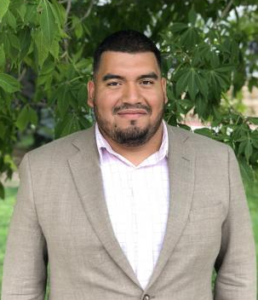 Jose Antonio Sanchez is a doctoral candidate and graduate research/teaching assistant at the University of Colorado Boulder in the Sociology department and a graduate affiliate at the Institute of Behavioral Science in the Prevention Science Program. Jose received his B.S. and M.S. from California State University, Los Angeles. His research interests are gangs and criminal networks, program evaluation, and criminological theory. He is currently working as a graduate research assistant for a National Institute of Justice (NIJ) funded randomized control trial evaluation of the Gang Reduction Initiative of Denver (GRID). Jose’s dissertation focuses on gang intervention by street outreach workers in Denver. Specifically, he is focusing on how the outreach workers for the GRID program internalize and conceptualize gang intervention, the program model, and the influence it has on service delivery. In addition to his work at the University of Colorado Boulder, he has been a research assistant with the Emergency Preparedness Research, Evaluation, & Practice (EPREP) Program at the Harvard T.H. Chan School of Public Health. Prior to attending CU Boulder, he worked as a research assistant for the Los Angeles Mayors’ Office of Gang Reduction and Youth Development (GRYD). Jose’s research has been published in Homicide Studies, Journal of Interpersonal Violence, and Justice Evaluation Journal.
_____________________ *** _____________________
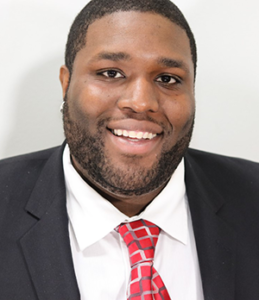 A Native of the Bronx Durrell Malik Washington Sr. is an Abolitionist Social Worker and Ph.D. Candidate at the University of Chicago in the school of social work. His scholarship of focus lies at the intersections of Abolition, Juvenile Legal Law and Policy, Families and Networks. His dissertation study focuses on the impact of youth incarceration on Black families across the United States, specifically through the lens of siblings of formerly incarcerated young people. Durrell teaches courses related to Abolition, The Social Meaning of Race, Race Crime and Justice, and Human Behavior in the Social Environment. Durrell received his Master’s Degree in Social Work from Columbia University in 2018.
 CJ Appleton is a doctoral student in the Criminology, Law, and Society department at George Mason University. He currently works as a Graduate Research Assistant at the Center for Advancing Correctional Excellence! (ACE!) under the direction of Dr. Faye S. Taxman. CJ’s research is centered around race, gender, identity, criminal justice systems behavior, and organizational theory. CJ’s dissertation work is a replication and expansion of Dr. Maruna’s Liverpool Desistance Study. It aims to develop a synergy between a critical race approach and a general theory of desistance to examine the role of race in the development of desistance narratives. Beyond that, CJ’s work on criminal justice reform has focused on community supervision. Specifically, his work focuses on officer-client relationships, supervision conditions, using a humanistic approach in supervision practice, and improving implementation of evidence-based reforms within organizations.
_____________________ *** _____________________
 Vanessa Centelles, MA, is a doctoral candidate in the Department of Criminology at the University of South Florida (USF). Her research uses an interdisciplinary approach and intersectional framework to explore how sociocultural factors influence criminal behaviors, victimization experiences, and perceptions of crime. Her work largely centers around marginalized and minoritized adult persons, with a focus on individuals who identify as Hispanic and Latino/x/e. She has experience with an array of methodologies and analytical strategies such as secondary data analysis, content analysis, quasi-experimental design, regression techniques, and structural equation modeling. Notably, her expertise and passion lie in survey methodology and primary data collection. For example, her dissertation uses primary survey data to examine (1) how processes such as acculturation and discrimination relate to intimate partner violence (IPV) victimization experiences and definitions of IPV, (2) the (in)variance of these processes by race and generational status, and (3) the role of resiliency in moderating these relationships. Her published scholarship has appeared in highly recognized and specialized journals including American Journal of Criminal Justice, Criminal Justice and Behavior, and Social Media + Society, among other outlets. In addition to being recognized as a Ruth D. Peterson Fellow by the American Society of Criminology, Vanessa has been recognized by USF as a Graduate Success Fellow, Latino Graduate Success Fellow, and Scott F. Allen Outstanding Ambassador.
_____________________ *** _____________________
 Sheena L. Gilbert (ABD), is a Ph.D. student in the School of Criminology and Criminal Justice (SCCJ) at the University of Nebraska at Omaha (UNO). She is also a citizen of the Stockbridge-Munsee Tribe and identifies as an Indigenous criminologist. Her research focuses on, gender-based violence, Indigenous crime & victimization, including Missing or Murdered Indigenous Persons (MMIP), victimization in underserved populations, campus/university sexual violence, and policy reform and Indigenous persons (e.g., VAWA). In addition, she currently serves as a member of the Nebraska Tribes Addressing Violence (NETAV) Coalition.
Her publications include works that examined personal victimization in Native communities using two models of social disorganization theory (traditional and Indigenized) (Crime & Delinquency), the role of victim advocates in missing Native person cases (Journal of Interpersonal Violence), how the Violence Against Women Act (VAWA) fails to protect Indigenous Women (Feminist Criminology), assessing the scope of missing Native Americans in Nebraska (Race and Justice), and the victimization of Indigenous LGBTQIA2S persons (book chapter in Queer Victimology: Understanding the Victim Experience).
Her current grant works includes NIJ-funded grants to create a tribal-centered campus climate assessment (CCA) for tribal colleges/universities (TCUs) and replicating the “Nebraska Model” of missing Native persons to examine the scope of MMIP in New Mexico. Other grant work includes evaluating a newly created bystander basics training, the Minnesota sexual assault kit initiative (SAKI), and examining the scope of missing Native American persons in Nebraska.
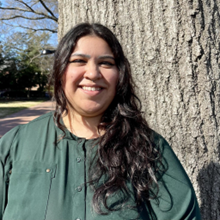 Susana Avalos, M.A.S., is a doctoral candidate and instructor in the Department of Sociology and Criminal Justice at Old Dominion University (ODU). Susana researches transgender people’s social, criminal legal, and online experiences and is interested in how they navigate safety, resist victimization, and the role of community support in overcoming trauma. Susana’s dissertation is an extensive and intersectional examination of the relationship between safety, place, and space in the lives of transgender individuals. Their recent scholarly work has appeared in a variety of journals including Crime & Delinquency, Homicide Studies, Journal of Interpersonal Violence, Policing & Society, Critical Criminology, and Gender Issues. Susana has been recognized University-wide by ODU as the 2024 Outstanding Graduate Teaching Assistant Award – Classroom Instructor, received a Certificate of Commendation from ODU’s Academic Success Center for making a positive impact on the educational experiences of a first-year student, and was awarded summer funds to facilitate the completion of the dissertation research from The Graduate School. Most recently, Susana participated in the Academy of Criminal Justice Sciences as a Doctoral Summit Fellow (2024) and received the 2023 honorable mention to the American Society of Criminology’s Larry J. Seigel Graduate Fellowship for the Study of Gender and Crime.
_____________________ *** _____________________
 Kendall Riley is a doctoral candidate in the Department of Sociology and Criminology at the University of Iowa. Her research focuses on how the social environment influences physical health and perpetuates racial disparities in health. Her dissertation explores how the carceral state contributes to health inequalities among women. Specifically, she considers how states vary in their application of carceral logics and how this spatially patterns disease distribution and disparities in aging among Black and White women. Kendall has experience with using both qualitative and quantitative methodologies in her research. Most of her work employs blood-based biomarkers as indicators of health and uses large-scale secondary data, regression techniques, multi-level modeling, structural equation modeling, and factor analyses. Some of her research has been published in Social Science and Medicine, Journal of Health and Aging, and the Journal of Crime and Justice. In addition to being recognized as a Ruth D. Peterson fellow, Kendall is also a National Science Foundation Graduate Research Fellow. She is also an alum of Indiana University where she received B.S. degrees in Human Biology and Psychology. Beyond her research, Kendall enjoys mentoring students from underrepresented backgrounds in academia through Indiana University’s Center of Excellence for Women & Technology’s Black women & STEM Program and University of Iowa’s Peer-to-Peer mentoring program.
_____________________ *** _____________________

Kaelyn Sanders is a Ph.D. Candidate (ABD) in the School of Criminal Justice at Michigan State University. Using critical and intersectional frameworks, Kaelyn’s research sits at the nexus of community supervision, reintegration, and inequality. Her research has been published in the Journal of Criminal Justice, Feminist Criminology, a
nd the Kansas Journal of Law & Public Policy. Kaelyn’s dissertation research will qualitatively explore the intersections of racial, gender, carceral, and digital inequality among Black men and women on parole in Wayne and Genesee County, Michigan.
As a Ph.D. Candidate, Kaelyn has worked on program evaluation projects for community-based reentry and gun violence programs in the state of Michigan and serves as the graduate assistant for her program’s Prospective Doctoral Student Recruitment and Retention Program Grant. In this role, she works to increase DEI in her graduate program by meeting with students at minority-serving institutions and assessing areas where current graduate students can be better supported. She previously held a summer graduate research associate position at Arnold Ventures working on their pretrial justice team and interned at a local probation and reentry program in Lansing, Michigan.
Kaelyn is also a 2024 National Academies of Sciences, Engineering, and Medicine Mirzayan Science and Technology Policy Fellow, a National Science Foundation Graduate Research Fellow, and an alumni of The Ohio State University, where she received her B.A. in Sociology and Criminology.
 Yu-Heng (Steven) Chen is a Ph.D. candidate in the Department of Criminal Justice at Temple University. His research focuses on corrections, reentry, substance use, life course, human rights, and comparative justice. Methodologically, Steven employs a wide array of approaches, including quantitative, qualitative, mixed-methods, and systematic reviews. He earned his bachelor’s degree in Crime Prevention and Corrections from Central Police University in Taiwan, a master’s degree in Human Rights and International Politics (with Merit) from the University of Glasgow in the United Kingdom, and a master’s degree in Criminal Justice from Temple University.
Steven has received numerous fellowships and awards. In addition to the Ruth D. Peterson Fellowship, he is the recipient of the 2025–2026 Public Policy Lab Research Team Fellowship at Temple University, the 2024 ACJS Doctoral Summit Fellowship, and the 2023 Modern Meta-Analysis Research Institute Fellowship. He was awarded first place in the 2025 ACJS Student Panel Presentation and received the Research Award for Advanced Doctoral Students from Temple University.
As a first-generation international student from a working-class background, Steven is deeply committed to student-centered teaching and mentorship. His dedication to teaching has been recognized with the Graduate Student Teaching Assistantship Award from the College of Liberal Arts and the M. Kay Harris Teaching Award from the Department of Criminal Justice at Temple University in 2024.
Steven’s research is also informed by his professional background as a corrections officer in Taiwan. He is currently involved in projects examining the complexity of prison visitation and the lived experiences of older incarcerated individuals.
_____________________ *** _____________________
 Candice Crutchfield is a Ph.D. Candidate in Sociology at The Ohio State University. She is a critical scholar studying families and the collateral consequences of incarceration. Guided by Black feminist criminology and qualitative inquiry, her research explores how power and inequality shape the experiences of reentry, survival, and resilience after incarceration. Her dissertation advances two primary aims: first, to examine the reentry process as an extension of carceral control, and second, to explore how Black women navigate and negotiate the rebuilding of social ties after incarceration.
_____________________ *** _____________________
 Brielle K. Savage is a PhD candidate in the School of Criminal Justice at Rutgers University – Newark and a doctoral fellow at the New Jersey Gun Violence Research Center. Her research centers on racial disparities in firearm violence and the lived experiences of Black homicide survivors. Her dissertation, Justice Amid Loss: An Exploration of Black Homicide Survivor’s Perspectives of Justice and Healing in the Aftermath of Gun Violence, qualitatively examines how Black homicide survivors define justice, assess system legitimacy, and cope with the loss of loved ones. Brielle’s research and service are deeply informed by her commitment to bridging research and practice with a focus on healing, racial justice, survivor advocacy, and translating research into meaningful policy change. She is a BRIDGS Scholar with Arizona State University’s Center for the Study of Guns in Society, a doctoral student fellow with The Black and Brown Collective for Community Solutions to Gun Violence.
Before pursuing her PhD, Brielle worked as a criminal investigator for the Office of the Public Defender and mentored at-risk and justice impacted youth through community-based programs. She has published in Justice Quarterly, American Journal of Preventative Medicine, Journal of Urban Health, and Journal of Racial and Ethnic Health Disparities. She holds a B.A. in Psychology and an M.A. in Criminal Justice. She is also a proud mother of two toddlers who inspire her commitment to equitable justice and community every day.
 Jordan Michael Parker is a Ph.D. Candidate (ABD) in the School of Criminal Justice at Michigan State University (MSU). His research focuses on community-based violence interventions (CVI), program evaluation, juvenile justice and delinquency, and police misconduct. Across his research, Jordan strives to be a community-engaged researcher collaborating with practitioners and systems-impacted individuals to improve both individual and community outcomes. His work has appeared in Policing: A Journal of Policy and Practice, Journal of Contemporary Criminal Justice, Journal of Applied Youth Studies, and the Justice Evaluation Journal.
Jordan has received numerous fellowships and honors throughout his graduate journey. In addition to the Ruth D. Peterson Fellowship, he is a member of the Bouchet Graduate Honor Society and a recipient of the 2026 ACJS Doctoral Summit Fellowship and the King Chavez Parks Future Faculty Fellowship. He also served as a Future Academic Scholars in Teaching (FAST) Fellow, where he designed, implemented, and evaluated a teaching-as-research project at MSU.
As a proud first-generation college student, Jordan is committed to inclusive teaching and meaningful mentorship. Prior to beginning graduate study at MSU, he served as a Program Advisor for the Ronald E. McNair Postbaccalaureate Program at Bowling Green State University and has been actively involved in the Summer Research Opportunities Program (SROP) at MSU.
_____________________ *** _____________________
 Sukanya Bhattacharya (she/her) is Doctoral Candidate (ABD) at the Department of Sociology at the University of Tennessee-Knoxville. Her dissertation titled ‘Voice and Action after Sexual Violence: Exploring Narratives of Survival Among Women Victims in West Bengal, India’, analyzes the narratives of victims of sexual violence to explore their actions (and inactions) in the aftermath of victimization. Her project is situated within the framework of narrative victimology, seeking to understand how victims build or rebuild a sense of self and account for post-victimization experience and action. Guided by feminist, critical, and international criminologies, her research also focuses on critically analyzing the role and functioning of the Indian criminal legal system while holding the sociological concepts of silence and individual resistance up for inspection.
She has published book reviews in the International Review of Victimology and Crime, Media, Culture and has also presented in multiple conferences in the U.S. and South Asia. She is the recipient of the W.K. McClure Scholarship for Study Abroad, the Wanda Rushing Award for Sociological Research, and the Graduate Student Research Award from the University of Tennessee. She has also received the Excellence in Research and Service award from the Department of Sociology. As a Graduate Teaching Associate, Sukanya enjoys teaching undergraduate students a variety of courses including Social Problems, Criminology, Gender and Society, and Sociological Theory.
_____________________ *** _____________________
 Godwin Egbe is a PhD candidate in the Department of Criminal Justice and Legal Studies at the University of Mississippi. His research focuses on terrorism and cybercrime, policing, victimization, and social justice. His broader research examines how transnational organized crime affects marginalized communities, particularly in relation to socio-economic inequality, victimization, and fear of violent attacks. Godwin’s research interests are also shaped by his personal experiences, especially growing up in a minority ethnic community in Nigeria that has experienced historical marginalization and youth violence. He has used both quantitative and qualitative research methods in his work, with publications appearing in Crime and Delinquency, Journal of Economic Criminology, International Journal of Law and Psychiatry, and Social Sciences. In addition to his research, Godwin serves on the editorial board of the Journal of Economic Criminology. He has received several academic recognitions, including the 2025 ASC Division of International Criminology Graduate Fellowship for Global Research, the 2024 Student Paper Award from the same division, and the 2024 Norman White Outstanding Student Paper Award from the ASC Division on People of Color and Crime. He has also received the 2026 Academy of Criminal Justice Sciences Doctoral Summit Fellowship; the 2026 ACJS Student Panel Presentation Award (First Place); the 2026 ACJS Student Poster Presentation Award (Second Place); the 2025 ACJS International Section Outstanding Graduate Student Paper Award; the 2026 ACJS Victimology Section Mini Travel Grant and Outstanding Graduate Student Honorable Mention; and the 2026 Johnny W. Lott Outstanding Graduate Instructor Award from the University of Mississippi.
_____________________ *** _____________________
 Taylor Gonzales is a Ph.D. candidate in the School of Criminology and Criminal Justice at the University of Nebraska Omaha. Her research focuses on corrections, reentry, recidivism, and program evaluation, with a particular interest in how correctional and community-based interventions are implemented and experienced by the people they serve. Informed by her experiences growing up in a Hispanic community where criminal justice system involvement was a common reality, her work seeks to better understand the barriers and opportunities individuals face after incarceration.
A core focus of Taylor’s doctoral training has been developing and managing a research-practitioner partnership with the Never Give Up (NGU) Transitional Living Program, a community-based reentry organization in Omaha, Nebraska. Her dissertation stems from this work and examines how organizational processes, staff discretion, and participant experiences shape the implementation of reentry services. By identifying factors that support or hinder effective service delivery, her research aims to strengthen community-based reentry efforts and improve outcomes for justice-involved individuals.
Beyond her dissertation, Taylor serves as Process Evaluation Lead for a multi-year evaluation of correctional programming conducted in partnership with the Nebraska Department of Correctional Services. She also contributes to an Arnold Ventures-funded project focused on the development and evaluation of a parole decision-making tool.
Taylor’s research has appeared in journals such as Criminal Justice and Behavior and Criminal Justice Review, among others. Her long-term goal is to produce policy-relevant research that strengthens the connection between scholarship, practice, and community-based efforts to improve outcomes for justice-involved individuals and communities.
_____________________ *** _____________________
 Mindy is a first-generation doctoral student in George Mason University’s Department of Criminology, Law and Society and a member of Dr. Evan Lowder’s Early Justice Strategies Lab. Mindy’s research interests include corrections, reentry, and strategies to support justice-impacted individuals while reducing future justice-system contact. She is particularly interested in the impact of prison transfers and the interstate prison network.
Her dissertation will explore Hawaiʻi’s interstate prison transfer program, where the State of Hawaiʻi sends about half of their prison population to a correctional facility on the U.S. continent. Despite the decades-long use of interstate prison transfers in Hawaiʻi, little research has examined its impacts on individuals’ institutional experiences, access to external social connections, and post-release outcomes. Through a mixed-methods approach, her work seeks to understand how prison transfers and geographic distance impacts individuals’ incarceration and reentry experiences.
Beyond academics, Mindy volunteers with E Ala E Hawaiian Cultural Center, a nonprofit organization dedicated to perpetuating and sharing Native Hawaiian culture throughout the Washington, D.C., Maryland, and Virginia region. Through this work, she remains connected to her home community while helping create opportunities for cultural education and engagement thousands of miles from the islands.
THORSTEN SELLIN & SHELDON AND ELEANOR GLUECK AWARD RECIPIENTS
The Thorsten Sellin & Sheldon and Eleanor Glueck Award is given in order to call attention to criminological scholarship that considers problems of crime and justice as they are manifested outside the United States; internationally or comparatively.
1974: Franco Ferracuti
1975: Nigel Walker
1976: Leon Radzinowicz
1977: Sholmo Shoham
1978: Nils Christie
1979: Johannes Andenaes
1980: Hans H. Jescheck
1981: Willem H. Nagel
1982: Frederick McClintock
1983: Inkeri Anttila
1984: David P. Farrington
1985: Stanley Cohen
1986: Roger Hood
1987: Marc Ancel
1988: Maureen Caints
1989: Josine Junger-Tas
1990: Gordon Trasler
1991: Gordon Hawkins
1992: John B. Braithwaite
1993: David Garland
1994: Per-Olof Wikstrom
1995: Ulla Bondeson
1996: Anthony Bottoms
1997: Pat Carlen
1998: Jock Young
1999: Hans-Jurgen Kerner
2000: Pat O’Malley
2001: Martin Killias
2002: Friedrich Loesel
2003: Jonathan Shepherd
2004: Frances Heidensohn
2005: Richard Tremblay
2006: Peter Grabosky
2007: Susanne Karstedt
2008: Jan van Dijk
2009: David Nelken
2010: Ross Homel
2011: Manuel Eisner
2012: Marc Le Blanc
2013: Clifford Shearing
2014: Michael Levi
2015: Tapio Lappi-Seppälä
2016: Letizia Paoli
2017: Gerben Bruinsma
2018: Lorraine Mazerolle
2019: Paul Nieuwbeerta
2020: Rob White
2021: Julian V. Roberts
2022: no award given
2023: Katja Franko
2024: Federico Varese
2025: Jianhong Liu
 Stephen is a Professor of Criminology in the School of Sociology & Social Policy at the University of Nottingham. He was nominated for his research in four areas of criminology:
1: Criminal Careers and Desistance from Crime
Steve ran a longitudinal study of processes of desistance and probation supervision from 1996 until 2012, resulting in three books (one of which was his doctoral thesis and was published as a 2nd edn in 2022 to mark its 20th anniversary).
2: Politics and Crime
More recently, Steve has focused on the relationships between politics, public policy, crime, criminal justice processes and popular sentiments. This resulted in a book with Emily Gray (The Politics of Crime, Punishment and Justice: Exploring the Lived Reality and Enduring Legacies of the 1980’s Radical Right, which won the Division of Developmental and Life-Course Criminology’s Outstanding Contribution Award in 2025).
3: Crime in the Marketplace
His work with Susanne Karstedt explored why ‘ordinary’ citizens in England & Wales, the former-East Germany, and the former-West Germany committed ‘petty’ crimes in the marketplace (such as fiddling their expense claims, ‘padding’ insurance claims or resorting to ‘sharp’ practices in second hand sales). Their book (Respectable Citizens – Shady Practices: The Economic Morality of the Middle Classes) won Division of White Collar and Corporate Crime’s Outstanding Book Award in 2020.
4: The Fear of Crime
His research on the fear of crime explored the extent to which women’s fears of crime are related to perceptually contemporaneous offenses (with Helmut Hirtenlehner), how crime-related fears may be related to feelings of nostalgia (with Emily Gray, Phil Jones and Helmut), and the ways in which different cohorts may report different crime-fears related to the political discourses which were prevalent when they were children (using age, period, and cohort analyses, with Emily Gray).
EDWIN H. SUTHERLAND AWARD RECIPIENTS
1960: Thorsten Sellin
1961: Orlando W. Wilson
1962: Negley Teeters
1963: Herbert Wechsler, Walter Reckless
1964: Hon. James Chalmers McRuer
1965: no award given
1966: George Vold
1967: Donald R. Cressey
1968: Denis Szabo
1969: Lloyd E. Ohlin
1970: Alfred Lindesmith
1971: Marshall Clinard
1972: Leslie Wilkins
1973: Edwin Lemert
1974: Simon Dinitz
1975: C. Ray Jeffery
1976: Daniel Glaser
1977: Solomon Kobrin
1978: Seymour Halleck
1979: James Short, Jr.
1980: Gresham Sykes
1981: Albert J. Reiss, Jr.
1982: Gwynne Nettler
1983: Jack P. Gibbs
1984: Richard Quinney
1985: Gilbert Geis
1986: Travis Hirschi
1987: Alfred Blumstein
1988: Ronald L. Akers
1989: Marvin E. Wolfgang
1990: Malcolm W. Klein
1991: LaMar Empey
1992: Lee Robins
1993: Albert K. Cohen
1994: Joan McCord
1995: Delbert S. Elliott
1996: Robert K. Merton
1997: John Hagan
1998: Charles R. Tittle
1999: Lawrence Sherman
2000: Norval Morris
2001: Robert J. Sampson
2002: David P. Farrington
2003: William Chambliss
2004: John Braithwaite
2005: John H. Laub
2006: Daniel S. Nagin
2007: Franklin Zimring
2008: Terence P. Thornberry
2009: Nicole Rafter
2010: Francis Cullen
2011: Ruth D. Peterson
2012: David Garland
2013: Cathy Spatz Widom
2014: David Weisburd
2015: Robert Agnew
2016: Ross L. Matsueda
2017: Rick Rosenfeld
2018: Sally S. Simpson
2019: Peggy Giordano
2020: Gary LaFree
2021: Steven F. Messner
2022: D. Wayne Osgood
2023: Darrell Steffensmeier
2024: Kathleen Daly
2025: Elijah Anderson
TEACHING AWARD RECIPIENTS
The Teaching Award is a lifetime-achievement award designed to recognize excellence in undergraduate and/or graduate teaching over the span of an academic career.
2010: Mark Israel, University of Western Australia
2011: David McDowall, SUNY-Albany
2012: no award given
2013: Jody Clay-Warner, University of Georgia
2014: Laure Weber Brooks, University of Maryland
2015: no award given
2016: Lori Pompa, Temple University
2017: Michelle Inderbitzin, Oregon State University
2018: Danielle S. Rudes, George Mason University
2019: Valerie Jenness, University of California, Irvine
2020: Kevin Wright, Arizona State University
2021: Christina DeJong
2022: Emily Lenning
2023: Nicole Fox
2024: Bonita M. Vesey
2025: Cheryl Lero Jonson
2026: Hollie Nyseth Nzitatira
 Hollie Nyseth Nzitatira is Professor of Sociology at The Ohio State University. Her scholarship focuses on mass violence and transitional justice. Her recent articles have appeared in Criminology, the American Journal of Sociology, the American Sociological Review, and the American Journal of Political Science. She has forthcoming books with Oxford University Press on reintegration after incarceration for genocide and with Cambridge University Press on atrocity prevention. Hollie teaches courses on global crime, genocide, and social research methods. Her courses regularly partner with local and international organizations, including refugee resettlement agencies, genocide prevention organizations, and nonprofits. She also created Ohio State’s first education abroad program in Rwanda, which she has led seven times. Hollie has supervised more than 20 undergraduate honors theses, advised dozens of undergraduate researchers, and served on 60 graduate student committees. She co-created Ohio State’s Holocaust and Genocide Studies Certificate and currently serves as Director of Undergraduate Studies and Honors Director for Sociology and Criminology. Beyond the university, Hollie is deeply committed to public education. She has trained middle and high school educators across the United States on teaching genocide and atrocity crimes, coauthored a free primer for educators, developed open-access lesson plans on the genocides in Rwanda and Guatemala, and is currently coauthoring a genocide survivor memoir for classroom use. Through her work with the Auschwitz Institute for the Prevention of Genocide and Mass Atrocities, she also trains policymakers, civil servants, educators, and human rights professionals around the world on atrocity prevention and early warning systems.
AUGUST VOLLMER AWARD RECIPIENTS
The August Vollmer Award recognizes an individual whose scholarship or professional activities have made outstanding contributions to justice and/or to the treatment or prevention of criminal or delinquent behavior.
1960: Paul Bohannon, Marvin E. Wolfgang
1961: Sheldon/Eleanor Glueck
1962: James Bennett
1963: Austin MacCormick
1964: Mr. J. Adrien Robert
1965: no award given
1966: Judge George Edwards
1967: Howard Leary
1968: Myrl Alexander
1969: Hon. Joseph Tydings
1970: Milton Rector
1971: no award given
1972: Jerome Skolnick
1973: E. Preston Sharpe
1974: Patrick V. Murphy, Sol Rubin
1975: Herbert Sturz
1976: Patricia Wald
1977: Richard A. McGee
1978: Judge David Bazelon
1979: Norval Morris
1980: Gerhard O.W. Mueller
1981: Vincent O’Leary
1982: Don M. Gottfredson
1983: no award given
1984: Benjamin Ward
1985: John Keith Irwin
1986: Anthony G. Amsterdam
1987: Jerome G. Miller
1988: Lee Brown
1989: Allen Breed
1990: Daniel Glaser
1991: Caleb Foote
1992: James K. Stewart
1993: Barry Krisberg
1994: Joan Petersilia
1995: Russell & Rebecca Dobash
1996: Elizabeth Stanko
1997: Hugo Adam Bedau
1998: Peter W. Greenwood
1999: J. David Hawkins
2000: William J. Bowers
2001: Hans Toch, Jeremy Travis
2002: James J. Fyfe
2003: Delbert S. Elliott
2004: Edward Latessa
2005: Jacquelyn C. Campbell
2006: Franklin Zimring
2007: Richard Catalano
2008: Malcolm W. Klein
2009: Elliott Currie
2010: Howard Snyder
2011: Patricia Van Voorhis
2012: John Goldkamp
2013: Mark Lipsey
2014: David Farrington
2015: C. Ronald Huff
2016: Denise Gottfredson
2017: David Weisburd
2018: Charles F. Wellford
2019: Valerie Jenness
2020: Larry Sherman; Presentation
2021: Anthony A. Braga
2022: Scott Decker
2023: Faye Taxman
2024: Henry Pontell
2025: Daniel S. Nagin
 Thomas G. Blomberg is Dean and Sheldon L. Messinger Professor of Criminology at Florida State University’s College of Criminology and Criminal Justice (College), where he has been since completing his doctorate from the University of California at Berkeley. In 2003, he founded the College’s Center for Criminology and Public Policy Research, which has secured tens of millions of dollars in grants, resulting in numerous high-caliber research and evidence-informed policy studies on crime, education for incarcerated youth, victimization, law enforcement, corrections, fraud and financial exploitation of older adults, and more.
During Dr. Blomberg’s Deanship, the College has and continues to be ranked among the best criminology programs in the country. The College is characterized by a full commitment to a translational criminology research, policy, and education agenda.
Dr. Blomberg was named one of the most influential criminologists for 2010 – 2020 (Academic Influence, 2021) and has earned numerous teaching awards for his commitment to student success. He served as Editor of Criminology & Public Policy from 2007 – 2013. Among his books are American Penology, which was cited by the U.S. Supreme Court in Smith et al. V DOE et al., Punishment and Social Control, and Advancing Criminology and Criminal Justice Policy. His many research and policy articles have appeared in the Annual Review of Criminology, Scientific American, Criminology & Public Policy, Journal of Research in Crime and Delinquency, Journal of Criminal Law and Criminology, and the Journal of Aging & Social Policy, among others. Media accounts of his research have been reported in the Washington Post, Wall Street Journal, New York Times, U.S. News and World Report, the Economist, the AARP Bulletin, and have been featured in numerous national television news stories. He has frequently provided research and policy consultation and testimony to federal, state, and local governments, including the Czech Republic, France, and Germany.
The President’s Award for Distinguished Contributions to Justice (established in 2001) is given annually to an individual or organization who, through either a single initiative or over a longer period of time, has made significant and distinguished contributions to the cause of justice. In the case of joint efforts, co-recipients may be named. The President submits a nominee for Board approval.
Members of the ASC Board may not receive this award during their term in office. The Executive Board may decide not to give the award in any given year.
PRESIDENT’S AWARD FOR DISTINGUISHED CONTRIBUTIONS TO JUSTICE RECIPIENTS
The first award given by the American Society of Criminology was to Robert H. Gault. He received an award of recognition from then ASC President Marcel Frym at the December 1959 ASC Annual Meetings which were held in Chicago. Dr. Gault served as the Editor-in-Chief of the Journal of Criminal Law and Criminology for 50 years
At the ASC Annual Meetings in Puerto Rico in November of 1971, then ASC President Simon Dinitz gave the following individuals, Presidential Citations:
Santos Amadeo
Helen Silver
Pedro Velez
A number of Presidential Citations were given by then ASC President Charles L. Newman at the ASC Annual Meetings in Caracas, Venezuela in November of 1972, but the names of the recipients have been lost to history
Please visit the individual Division websites for information about Division awards
© 2006-2023 American Society of Criminology