Publications
The American Society of Criminology’s publications consist of the following:
Journals
Newsletter
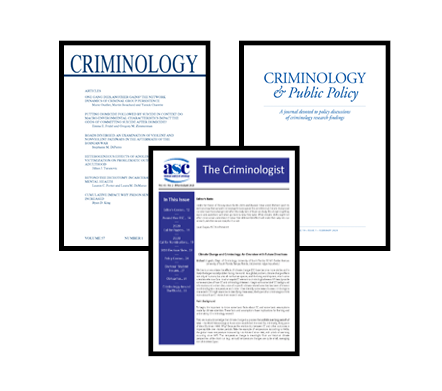

The American Society of Criminology’s publications consist of the following:
One of the fastest growing and most popular innovations in public safety in the United States is the use of alternative non-police responders to 911 calls. Spurred by the killing by police of George Floyd and ensuing protests in 2020, this approach aims to reduce the scope of policing and offer a more suitable response to a range of social problems. There are more than 100 alternative response teams across the country, and a key challenge is ensuring that the most appropriate responder is dispatched to handle each situation.
In a new study, researchers examined how dispatch organizations in San Francisco and Denver have structured decisions about whom to send on calls. They found that the protocols currently in use are poorly suited to handle the uncertainty, subjectivity, and ambiguity that characterize many street crisis calls.
The study, by researchers at Suffolk University and New York University (NYU) School of Law, appears in Criminology & Public Policy, a publication of the American Society of Criminology.
Prosecutors play an important role in determining the outcomes of court cases in the United States. In a special issue of Criminology & Public Policy, the Editors-in-Chief have compiled articles on prosecutors and prosecutorial decision making. The issue features thought-provoking and timely studies from leading researchers in the field.
Criminology & Public Policy, the flagship policy and practice journal of the American Society of Criminology (ASC), is edited by Professors Ojmarrh Mitchell (University of California, Irvine), and Jacinta M. Gau (University of Central Florida).
“Various reforms in criminal justice have expanded the influence of prosecutors, giving them significant discretionary control over key aspects of case processing and outcomes,” says Mitchell, professor of criminology, law, and society at UC Irvine as well as former vice president of the ASC. “Yet limited access to prosecutorial data has obscured the decision-making processes of these key players, hindering efforts to examine how they wield their discretion.”
“In this special issue, we present eight rigorous, empirical investigations that shed light on various components of prosecutors’ work in charging decisions, case declinations, diversion, plea bargaining, and sentencing,” adds Gau, professor of criminal justice at UCF.
The articles in the special issue include:
Evidence tied to criminal cases is often crucial to case outcomes, and recent technological advances have created new tools for collecting and disseminating evidence. Chiefly among these are body-worn cameras (BWCs). In a new study, researchers examined how evidence from BWCs in one U.S. jurisdiction affected prosecutorial decision making and case outcomes. The study found that BWC evidence had significant effects on case-processing outcomes, but these effects depended on the characteristics of the offense.
The study was conducted by researchers at the University of North Carolina (UNC) at Charlotte, Pennsylvania State University, the University of Maryland, and George Mason University. It appears in a special issue of Criminology & Public Policy, a publication of the American Society of Criminology, on prosecutors and prosecutorial decision making.
As an alternative to traditional prosecution, in Indiana, prosecutors can offer diversion for residents charged with low-level offenses, minimizing the collateral consequences of involvement with the criminal justice system. In a new study, researchers evaluated the effectiveness of two prosecutor-led diversion programs in the state. The programs were associated with reduced recidivism and participation moderated the effect of race on future criminal justice contact.
The study was conducted by researchers at Indiana University Bloomington, Indiana University Indianapolis, the Kansas Sentencing Commission, and George Mason University. It appears in a special issue of Criminology & Public Policy, a publication of the American Society of Criminology, focused on prosecutors and prosecutorial decision making.
Differences Were Based on Communities, Office Size
The criminal justice system in the United States is known for its broad scope and its disproportionate impact on Black and Hispanic communities. Advocates of the progressive prosecution movement place prosecutors—key drivers of the scale of criminal punishment—at the center of criminal justice reform, seeking to capitalize on lead prosecutors’ discretion and power with the goal of ending mass incarceration and promoting racial justice.
In a new study, researchers examined how charging and plea-bargaining practices as well as racial and ethnic disparities in two jurisdictions changed when progressive prosecutors replaced more traditional administrations. They found that progressive prosecutors handled cases in ways that resulted in less severe outcomes for all defendants, with differences based on the communities in which the courts operated and the size of the offices.
2022
February 2022
2021
December 2021
October 2021
September 2021
August 2021
July 2021
June 2021
Tax-free donations to ASC or any of the ASC Divisions.
© 2006-2023 American Society of Criminology